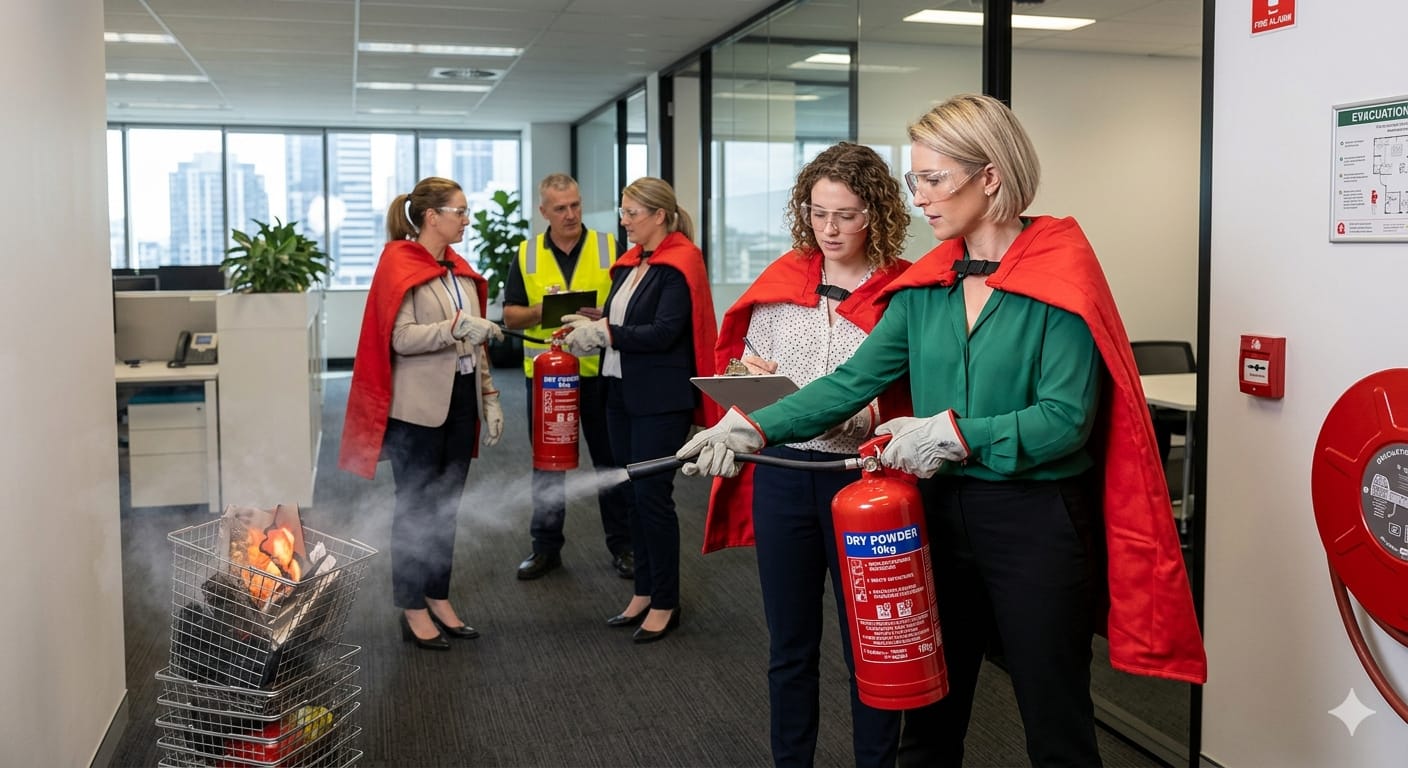
Develop practical skills in fire prevention, safe evacuation, and emergency response. Learn to operate firefighting equipment and manage workplace emergencies effectively. Accredited NQF Level 3 (8 credits) qualification with recognized certification. Ideal for safety officers, supervisors, and workplace emergency teams. Enhance workplace safety, protect lives, and minimize fire‑related risks.

An overview of the key South African legislation governing occupational health and safety, and what it means for both employers and employees in the workplace.
A clear breakdown of the definitions and distinctions between occupational health, occupational safety, and environmental management, and how these disciplines work together.
Understanding who is responsible for what in a workplace OHS system, from the employer down to the OHS representative and individual employee.
A systematic introduction to identifying workplace hazards across all categories, using proven methods such as workplace inspections and job safety analysis.
How to evaluate identified hazards using a risk matrix, apply the hierarchy of controls, and compile a basic risk register compliant with South African OHS requirements.
The fundamentals of fire science, classification of fires, fire extinguisher selection, hot work safety, and when to fight a fire versus when to evacuate.
Practical guidance on preparing for, conducting, and reporting on a workplace OHS inspection — a core skill for any OHS representative or officer.
A foundational lesson defining what constitutes a workplace emergency and surveying the range of emergency types that may occur in South African workplaces.
Understanding the critical difference between preparing for emergencies before they happen and responding effectively when they do — and what a complete Emergency Response Plan must contain.
A step-by-step guide to safe workplace evacuation, including the duties of floor wardens, special needs evacuation, assembly point management, and roll call procedures.
A clear breakdown of who does what when an emergency occurs — from the incident commander and floor wardens to first aiders, security, and the fire brigade.
The legal basis and practical foundations for workplace accident and incident investigation — definitions, reporting obligations, and when investigation is required.
Practical root cause analysis techniques including the 5 Whys method and cause-and-effect diagram, applied to workplace incident investigation.
How to compile a complete, legally compliant incident investigation report, including the required COIDA forms and communication of findings to management.
The practical skills and legal obligations of an OHS representative in capturing, presenting, and following up on employee health and safety concerns.
The types of OHS records required by law, principles of effective document control, and how to maintain an OHS filing system that supports compliance and auditing.
How to administer effective OHS committee meetings, compile OHS performance reports, and present corrective actions to management in a structured and professional manner.
The difference between OHS inspections and audits, how to prepare for internal and external audits, and how to close out audit findings effectively.
Welcome to the Fire Safety & Emergency Response course! Please ensure you complete all modules before the final assessment. Certificates will be issued within 7 days of completion.
Minimum Education: Grade 10 or equivalent literacy and numeracy skills.
Age Requirement: Learners must be 18 years or older.
Language Proficiency: Ability to read, write, and communicate effectively in English.
Physical Ability: Basic fitness to participate in practical fire drills and equipment handling.
Access to Technology: Computer or mobile device with internet connection for eLearning modules.
Commitment: Completion of all modules, assessments, and practical exercises within the course duration.
Safety Officers & Supervisors — responsible for workplace health and safety compliance.
Emergency Response Team Members — individuals tasked with handling fire or evacuation procedures.
Employees in High‑Risk Environments — factories, warehouses, construction sites, and other workplaces with fire hazards.
HR & Training Managers — ensuring staff meet Occupational Health & Safety requirements.
Community Volunteers & First Responders — anyone supporting fire prevention and emergency readiness.
General Workforce — employees seeking practical skills to improve workplace safety and preparedness.